
Liability vs Full Coverage — Utah
Free to compare
The Two-Car Coverage Split
You own two vehicles. One is newer, financed, or worth enough that you want collision and comprehensive. The other is older, paid off, and you're weighing whether liability-only makes sense. You've been told the multi-car discount saves money when you insure both on one policy, but you're not sure if mixing coverage levels on the same policy costs you that discount or raises the rate on the liability-only car.
The structural reality: Utah law requires every registered vehicle to carry at least $30,000 per person and $65,000 per accident in bodily injury liability, plus $25,000 in property damage liability, and personal injury protection. Full coverage adds collision and comprehensive to that base. The multi-car discount applies to the policy as a whole when multiple vehicles sit on it, regardless of whether those vehicles carry identical coverage levels. Mixing liability-only and full coverage on one policy is allowed and common, but the way carriers price that mix varies enough that the decision is not obvious.
“The multi-car discount applies to the policy as a whole, regardless of whether both vehicles carry identical coverage levels.”

Meet Utah's Requirements Without Overpaying
Get My Utah Car Insurance Quote$30,000 / $65,000 / $25,000
Utah Minimum Liability Limits
Every vehicle registered in Utah must carry at least $30,000 per person, $65,000 per accident in bodily injury liability, and $25,000 in property damage liability, plus personal injury protection. This is the floor for any vehicle on the road, whether you add collision and comprehensive or not.
Utah Driver License Division
What the Multi-Car Discount Actually Covers
The multi-car discount is a policy-level reduction, not a per-vehicle credit. When you insure two or more vehicles on the same policy, the carrier applies a percentage discount to the total premium. That discount does not require every vehicle to carry the same coverage. A policy with one full-coverage vehicle and one liability-only vehicle still qualifies for the multi-car discount, because both vehicles sit on the same policy.
The confusion arises because the discount percentage is applied to the combined premium, and the combined premium reflects the coverage levels you chose for each vehicle. A full-coverage vehicle costs more to insure than a liability-only vehicle, so the discount saves more dollars on the full-coverage car than on the liability-only car, even though the percentage is the same. The discount does not penalize you for mixing coverage levels. It penalizes you only if you split the vehicles onto separate policies.
Carriers writing multi-car policies in Utah include State Farm, Geico, Progressive, Allstate, Farmers, USAA, American Family, Travelers, and National General. Each prices the liability-only and full-coverage split differently. Some carriers offer a larger discount when both vehicles carry full coverage; others apply the same discount regardless of coverage mix. The only way to know which structure costs less for your household is to compare quotes with both configurations: uniform full coverage on both vehicles, and mixed coverage with liability-only on the older car.
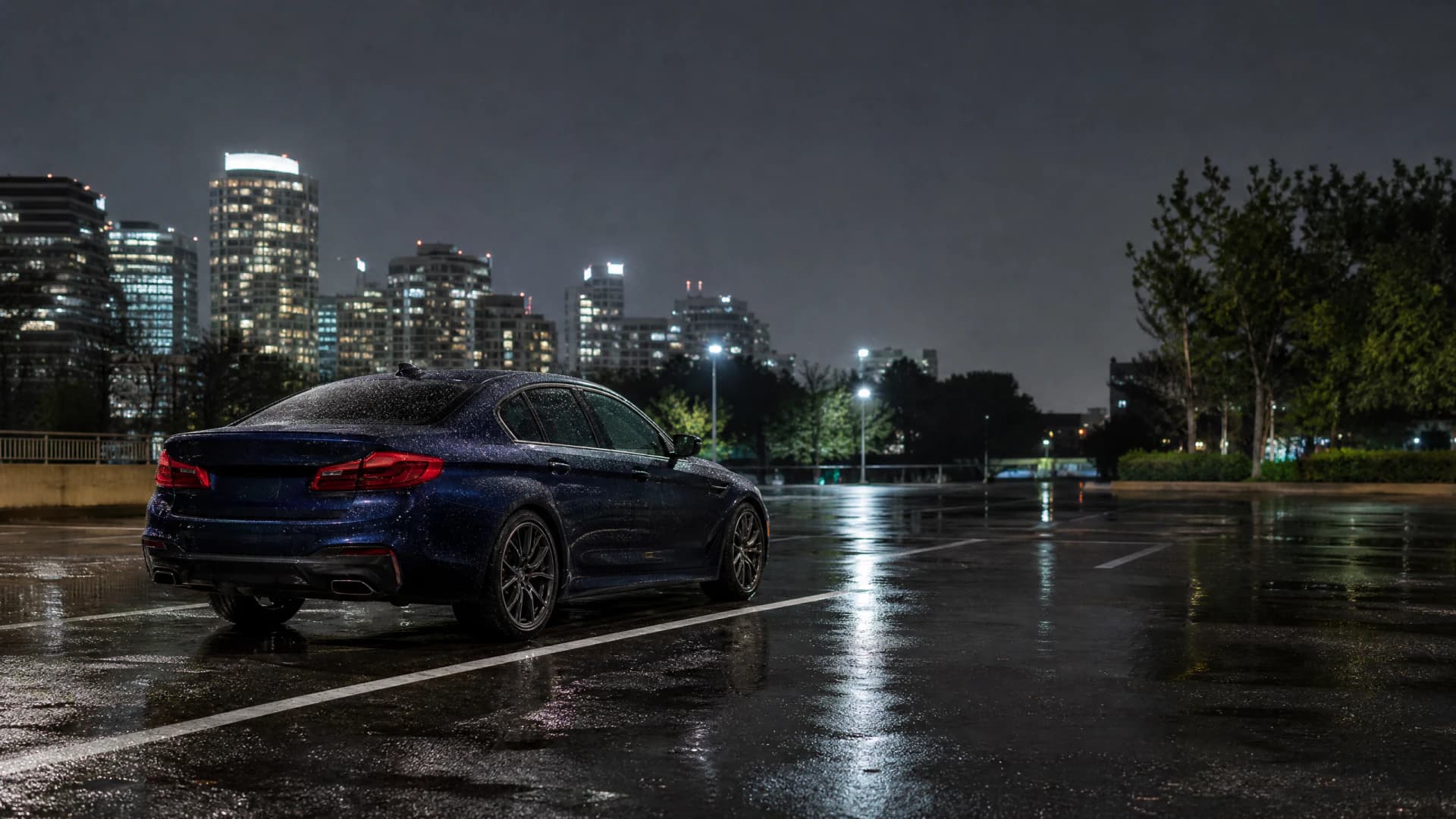
The multi-car discount applies when vehicles share one policy. Mixing liability-only and full coverage does not void the discount, but it changes how much the discount saves you in dollars.
Related Articles



How Carriers Price Mixed-Coverage Policies
Carriers do not price mixed-coverage multi-car policies uniformly. Some apply the multi-car discount as a flat percentage to the total premium, regardless of coverage mix. Others tier the discount: a larger percentage when both vehicles carry full coverage, a smaller percentage when one carries liability-only. A third group applies the discount only to the liability portion of the premium, which means the discount saves you less when one vehicle drops collision and comprehensive.
State Farm and USAA typically apply the multi-car discount to the entire policy premium, regardless of coverage mix. Geico and Progressive tier the discount in some states, offering a slightly larger percentage when both vehicles carry full coverage. Allstate and Farmers apply the discount to the liability portion only in certain configurations, which reduces the dollar savings when you drop collision and comprehensive on one vehicle. These structures are not published on carrier websites; they surface only when you request quotes with both coverage configurations.
The practical implication: you cannot assume that dropping to liability-only on the older car will save you money without comparing the actual quoted premiums. A carrier that offers a 20% multi-car discount on uniform full coverage but only a 15% discount on mixed coverage may end up costing you more than a carrier that offers a 15% discount on both configurations, depending on the base rates. The only way to know is to request quotes from multiple carriers with both coverage structures and compare the total annual cost for the two-car policy.
21 carriers
Utah Multi-Car Policy Writers
Twenty-one carriers write multi-car policies in Utah, including State Farm, Geico, Progressive, Allstate, USAA, Farmers, American Family, Travelers, National General, Liberty Mutual, Nationwide, Hartford, CSAA, Amica, Auto-Owners, Bristol West, Dairyland, GAINSCO, The General, Root, and Clearcover. Each prices mixed-coverage policies differently.
Utah Department of Insurance carrier roster
The Same-Policy Requirement and Coverage Splits
The multi-car discount requires both vehicles to sit on the same policy. If you split the vehicles onto separate policies—one full-coverage policy for the newer car and one liability-only policy for the older car—you lose the multi-car discount entirely, even if both policies are with the same carrier and in the same household. The discount is a policy-level benefit, not a household-level or carrier-level benefit.
This requirement creates a structural decision point: is the cost of full coverage on the older vehicle, minus the multi-car discount, less than the cost of a separate liability-only policy with no discount? In most cases, keeping both vehicles on one policy with mixed coverage costs less than splitting them onto separate policies, because the multi-car discount on the combined policy offsets the higher cost of insuring the older vehicle with collision and comprehensive. But the answer depends on the specific carriers you're comparing and the value gap between the two vehicles. If the older vehicle is worth very little and the newer vehicle is expensive to insure, a separate liability-only policy on the older car can sometimes cost less than keeping it on the multi-car policy with full coverage.
Compare Both Configurations Before You Decide
Request quotes from at least three carriers writing multi-car policies in Utah. For each carrier, request two quotes: one with full coverage on both vehicles, and one with full coverage on the newer vehicle and liability-only on the older vehicle. Compare the total annual cost for the two-car policy under both configurations. The configuration that costs less is the one you choose, not the one that sounds like it should cost less.
When you request quotes, provide the same coverage limits, deductibles, and driver information for both configurations so the comparison is accurate. If you change the liability limits or the deductible between quotes, you're comparing different products and the cost difference will not reflect the coverage-level decision alone. Use the same $500 or $1,000 deductible for collision on the full-coverage vehicle in both quotes, and use Utah's minimum liability limits or higher limits if you carry them. The goal is to isolate the cost of dropping collision and comprehensive on one vehicle while keeping everything else constant.
When Liability-Only Makes Sense for One Vehicle
If the older vehicle is worth less than ten times your collision deductible, liability-only coverage is often the better financial decision. Over two or three years, you'll have paid more in premiums than the car is worth. At that point, liability-only coverage and self-insuring the vehicle's replacement cost makes more sense.
The second consideration is loan status. If the older vehicle is financed or leased, the lender requires collision and comprehensive coverage until the loan is paid off. You cannot drop to liability-only on a financed vehicle, even if the car's value has dropped below the threshold where it would make financial sense. The lender's interest in the collateral overrides your coverage preference. Once the loan is satisfied, you can drop collision and comprehensive and carry liability-only on that vehicle while keeping full coverage on the newer financed car.
Get Your Free Quote
Get My Utah Car Insurance QuoteFrequently Asked Questions
Can I insure two cars on one policy with different coverage levels in Utah?
Yes. Utah allows you to carry full coverage on one vehicle and liability-only on another vehicle on the same multi-car policy. The multi-car discount applies to the policy regardless of coverage mix. Carriers price mixed-coverage policies differently, so compare quotes with both configurations to see which costs less.
Does dropping collision and comprehensive on one car void the multi-car discount?
No. The multi-car discount is a policy-level benefit that applies when two or more vehicles sit on the same policy. Dropping collision and comprehensive on one vehicle does not void the discount. Some carriers tier the discount percentage based on coverage mix, but the discount still applies.
What is Utah's minimum liability coverage requirement for each vehicle?
Utah requires $30,000 per person and $65,000 per accident in bodily injury liability, $25,000 in property damage liability, and personal injury protection on every registered vehicle. This is the minimum coverage you must carry, whether you add collision and comprehensive or not.
Should I keep an older car on my multi-car policy or move it to a separate liability-only policy?
In most cases, keeping both vehicles on one policy with mixed coverage costs less than splitting them onto separate policies, because the multi-car discount on the combined policy offsets the higher cost of insuring the older vehicle. Compare quotes for both structures to confirm which costs less for your household.
How do I know if liability-only coverage makes sense for my older vehicle?
If the vehicle is worth less than ten times your collision deductible, liability-only coverage is often the better financial decision.
Do all carriers in Utah offer the same multi-car discount on mixed-coverage policies?
No. Some carriers apply a flat percentage discount to the total premium regardless of coverage mix. Others tier the discount, offering a larger percentage when both vehicles carry full coverage. A third group applies the discount only to the liability portion of the premium. Request quotes from multiple carriers to compare.