
Geico Multi-Car Coverage — Utah
Free to compare
Geico Writes Multi-Car Policies in Utah
You own two or more cars and need to know whether Geico will insure all of them on one policy in Utah. Geico writes standard-tier auto insurance in Utah and offers multi-car policies when every vehicle meets the same-policy requirement: all cars titled to the same household members, garaged at the same address, and added to the same policy number. If you bought a second car recently or a household member moved in with their own vehicle, the multi-car discount applies only when both vehicles sit on the same Geico policy.
The confusion arises when a household assumes any two cars owned by the same people automatically qualify. They do not. A vehicle titled to a spouse on a separate policy, a car garaged at a different address, or a vehicle added mid-term without notifying Geico can all disqualify the discount. This article clarifies Geico's same-policy structure in Utah, what adding a vehicle does to your premium, and how to structure coverage when your household owns multiple cars.
“Adding a vehicle mid-term re-rates the entire policy based on the new household risk profile, not just the added car.”
Meet Utah's Requirements Without Overpaying
Get My Utah Car Insurance Quote$30,000 / $65,000 / $25,000
Utah Minimum Liability Limits
Utah requires $30,000 bodily injury per person, $65,000 per accident, and $25,000 property damage. Every vehicle on your Geico policy must carry at least these minimums; adding a car does not change the floor, but it does re-rate the entire policy based on the new vehicle's risk profile.
Utah Driver License Division
The Multi-Car Discount Requires One Policy
Geico's multi-car discount applies when two or more vehicles are insured on the same policy number. The discount does not apply across separate policies, even when both policies are with Geico and both are in the same household's name. If you and your spouse each have a Geico policy covering one car, you do not receive the multi-car discount until you combine both vehicles onto a single policy.
The same-address requirement matters. Geico typically requires all vehicles on a multi-car policy to be garaged at the same address. A car garaged at a second home, a college student's vehicle parked at a dorm in another city, or a vehicle registered to a different address may not qualify for the same-policy discount. Some carriers allow exceptions for students or military members; Geico's specific rules vary by underwriting, so confirm garaging requirements before adding a vehicle.
Adding a vehicle mid-term re-rates the entire policy. Geico does not simply add a flat amount for the new car. The system recalculates the premium for all vehicles based on the new household risk profile, which can raise or lower the total depending on the added vehicle's age, value, and the driver assigned to it. A newer high-value car driven by a young household member will raise the premium more than an older sedan driven by an experienced driver.
A vehicle titled to someone outside the household or garaged at a different address typically does not qualify for Geico's same-policy multi-car discount.


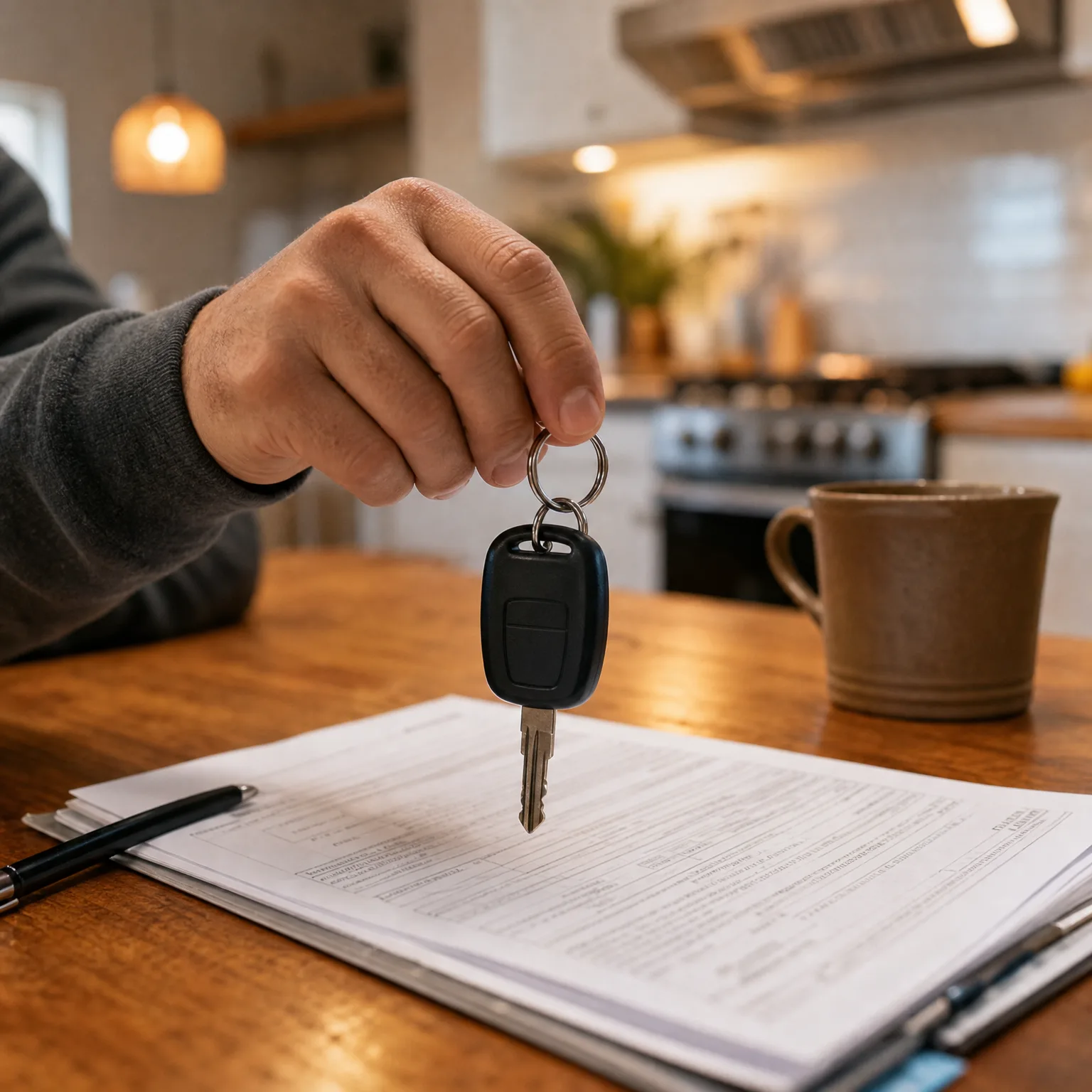


Combining Two Policies After Marriage or a Move
You and your spouse each have a separate Geico policy, and you want to know whether combining them onto one multi-car policy saves money. In most cases, combining two policies lowers the total premium because the multi-car discount applies and Geico consolidates administrative overhead. The combined premium is typically less than the sum of the two separate premiums, but not always. If one spouse has a poor driving record or a high-risk vehicle, combining policies can raise the total cost for the household.
Geico allows you to combine policies at any time, not just at renewal. Call Geico and request a quote for a combined multi-car policy. Geico will calculate the new premium based on both vehicles, both drivers, and the household's combined risk profile. If the combined premium is lower, Geico cancels the two separate policies and issues a single policy effective immediately. If the combined premium is higher, you can keep the two policies separate until renewal and re-evaluate then.
The same-address requirement applies here. If you and your spouse live at different addresses, Geico may not allow you to combine policies until both vehicles are garaged at the same location. Confirm garaging addresses before requesting a combined quote.
2,876,800
Registered Vehicles in Utah
Utah has 2,876,800 registered motor vehicles and 2,252,656 licensed drivers, meaning many households own more than one car. Structuring coverage correctly across multiple vehicles is a common need, not an edge case.
Utah DMV, 2022

What Happens When You Remove a Vehicle
Removing a vehicle from your Geico multi-car policy re-rates the remaining vehicles. Geico recalculates the premium based on the new household profile, which can raise or lower the cost per vehicle depending on which car you removed. If you sold a high-risk vehicle or removed a car driven by a young driver, the premium for the remaining vehicles may drop. If you removed a low-risk vehicle and kept a high-risk one, the per-vehicle cost may rise because the multi-car discount now applies to fewer vehicles.
Notify Geico immediately when you sell, total, or permanently remove a vehicle. Geico will adjust your premium effective the date you no longer own the car, and you will receive a prorated refund for the unused portion of the removed vehicle's premium. If you wait until renewal to report the removal, you pay for coverage you no longer need for the remainder of the term.
Compare Geico Against Other Utah Carriers
Geico is one of many carriers writing multi-car policies in Utah. State Farm, Progressive, Allstate, American Family, Farmers, Liberty Mutual, Nationwide, USAA, and Travelers all write standard-tier multi-car coverage in Utah. Each carrier structures the multi-car discount differently: some apply a percentage discount to each vehicle, others reduce the base rate when multiple vehicles are present, and a few offer tiered discounts that increase with the third and fourth vehicle.
The best carrier for your household depends on your specific vehicle mix, driver profiles, and coverage needs. A carrier with a large multi-car discount on a high base rate can cost more than a carrier with a smaller discount on a lower base rate. Request quotes from at least three carriers, provide identical coverage limits and vehicle details to each, and compare the total annual premium for all vehicles combined. The Utah car insurance requirements page lists carriers writing in the state and the coverage minimums every policy must meet.
How to Add a Vehicle to Your Geico Policy
Contact Geico within 30 days of acquiring the new vehicle. Most carriers, including Geico, extend automatic coverage to a newly purchased car for a limited grace period, typically 14 to 30 days, as long as you already have an active policy. That grace period assumes you notify the carrier promptly. If you wait longer than the grace window and file a claim, Geico can deny coverage for the unreported vehicle. Call Geico or use their online portal to add the vehicle by VIN, and confirm the effective date matches your purchase or title transfer date.
Provide the vehicle's title, VIN, and the name of the primary driver. Geico will ask which household member drives the car most often, because that assignment affects the premium calculation. If the new car is driven by a household member with a clean record, the rate increase will be smaller than if it is assigned to a driver with violations or a young driver. Geico re-rates the entire policy at the moment you add the vehicle, so the premium change appears immediately, not at renewal.
Get Your Free Quote
Get My Utah Car Insurance QuoteFrequently Asked Questions
Does Geico offer a multi-car discount in Utah?
Yes. Geico offers a multi-car discount in Utah when two or more vehicles are insured on the same policy, titled to the same household, and garaged at the same address. The discount does not apply across separate policies.
How long do I have to add a new car to my Geico policy in Utah?
Geico typically extends automatic coverage to a newly acquired vehicle for 14 to 30 days, as long as you already have an active policy. Notify Geico within 30 days of purchase to avoid coverage gaps.
Can I combine two Geico policies into one multi-car policy in Utah?
Yes. Geico allows you to combine two separate policies into one multi-car policy at any time, not just at renewal. The combined premium is usually lower, but confirm the quote before canceling the separate policies.
Does adding a third vehicle to my Geico policy increase the discount?
Geico's multi-car discount structure varies by state and underwriting tier. Some carriers increase the discount with the third and fourth vehicle; others apply a flat discount regardless of vehicle count. Request a quote to see the specific impact.
What happens to my Geico premium if I remove one vehicle from a multi-car policy?
Geico re-rates the remaining vehicles when you remove one from a multi-car policy. The per-vehicle cost may rise or fall depending on which car you removed and how many vehicles remain on the policy.
Can I insure two cars on one Geico policy if they are garaged at different addresses in Utah?
Geico typically requires all vehicles on a multi-car policy to be garaged at the same address. Exceptions may apply for students or military members, but confirm garaging requirements with Geico before adding a vehicle at a different address.