
Lower Car Insurance Rates — Utah
Free to compare
Why Multi-Vehicle Households Pay More Than They Should
You insure two cars, maybe three. You added the second vehicle to your existing policy expecting a discount, and the premium went up anyway. Or you're comparing quotes and the multi-car discount everyone mentions isn't showing up on your estimate. The problem isn't the discount itself — it's that the discount only applies when your household's coverage structure meets specific requirements most drivers don't know exist.
Utah law requires every registered vehicle to carry at least $30,000 per person and $65,000 per accident in bodily injury liability, plus $25,000 in property damage liability. Personal injury protection is mandatory. But meeting the state minimum across multiple vehicles doesn't automatically trigger the multi-car discount. That discount requires every vehicle to sit on one policy, garaged at the same address, titled to people the carrier considers part of the same household. Miss any of those conditions and you're paying full rate on every car.
“The multi-car discount applies only when every vehicle sits on one policy under one garaging address.”

Meet Utah's Requirements Without Overpaying
Get My Utah Car Insurance Quote$30,000/$65,000/$25,000
Utah Minimum Liability
Every registered vehicle in Utah must carry at least this much bodily injury and property damage coverage. Personal injury protection is also mandatory. Households with multiple vehicles must meet this threshold on every car to register and drive legally.
Utah Department of Insurance
The Multi-Car Discount Requires One Policy
The multi-car discount is not automatic. It applies only when every vehicle you want covered sits on the same policy. If you and your spouse each maintain separate policies, even with the same carrier, you're not getting the discount. If a household member's car is titled separately and sits on their own policy, that vehicle doesn't count toward your multi-car discount and theirs doesn't benefit either.
Carriers define household differently, but the common thread is garaging address. Two cars garaged at the same address, titled to people living there, listed on one policy — that structure qualifies. A car titled to a college-age driver living at a different address during the school year may not. A vehicle garaged at a second property you own typically doesn't count unless the carrier explicitly allows multi-location households under one policy.
When you combine two separate policies into one after marriage or a move, the combined policy almost always costs less than the sum of the two originals. But the savings come from the multi-car discount plus the elimination of duplicate policy fees, not from any inherent household bundling magic. If the vehicles can't sit on one policy because of title, garaging, or driver-assignment conflicts, the discount disappears.
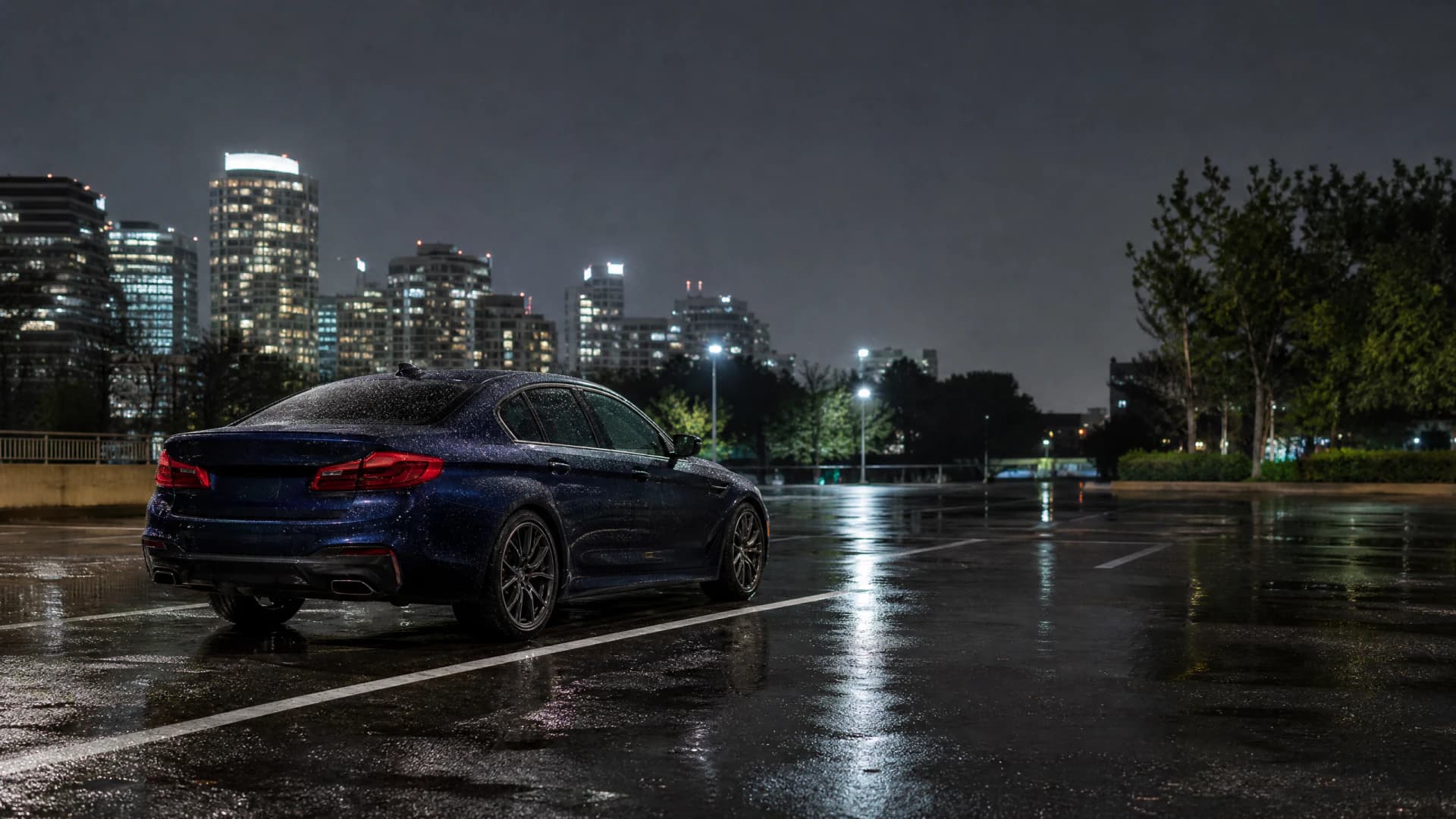
The multi-car discount vanishes the moment a vehicle moves to a separate policy, even if it's the same carrier and the same household address.





Coverage Decisions That Lower Premium Without Dropping Protection
Raising your deductible from $500 to $1,000 on collision and comprehensive coverage lowers your premium immediately. The trade-off is straightforward: you pay more out of pocket if you file a claim, but you pay less every month. For a rarely-driven vehicle or an older car with low market value, dropping collision and comprehensive entirely makes sense. Utah requires liability and personal injury protection, not physical damage coverage on your own vehicle.
If one of your vehicles is worth less than ten times your annual collision and comprehensive premium, you're paying more to insure the car than it's worth. Drop the physical damage coverage, keep the liability and PIP, and redirect the savings toward higher liability limits on the vehicles you drive daily. Liability coverage is what protects your assets when you're at fault; physical damage coverage protects the car itself. Prioritize the former.
Some carriers offer usage-based programs that track mileage or driving behavior and adjust your premium accordingly. If one of your household's vehicles sits in the driveway most of the week, a low-mileage or pay-per-mile program can cut that vehicle's premium substantially. The multi-car discount still applies to the policy as a whole; the usage-based adjustment applies to the individual vehicle. Stack both and the rarely-driven car costs a fraction of what it did on a standard policy.
6.2%
Utah Uninsured Motorist Rate
One in sixteen Utah drivers operates without insurance. Uninsured motorist coverage is optional in Utah, but it protects you when an at-fault driver can't pay. Households with multiple vehicles should carry this coverage on every car.
Insurance Information Institute, 2023

When Splitting Policies Costs Less Than Combining Them
The multi-car discount assumes every vehicle on the policy shares a similar risk profile. When one vehicle or driver breaks that assumption — a teen driver with their own car, a high-performance vehicle, a household member with a recent violation — the re-rated policy premium can exceed the cost of two separate policies. Run the numbers both ways before assuming one policy is always cheaper.
If your household includes a driver under 25 with their own vehicle, some carriers will quote that vehicle on a separate policy at a lower total cost than adding it to the family policy. The family policy keeps the multi-car discount across the remaining vehicles; the young driver's policy carries a higher rate but doesn't re-rate the other cars. The combined cost of both policies can be less than one policy covering everyone.
Compare Carriers That Write Multi-Vehicle Households in Utah
Not every carrier prices multi-vehicle households the same way. Carriers writing Utah auto insurance include Allstate, American Family, Farmers, Geico, Liberty Mutual, Nationwide, Progressive, State Farm, and USAA. Some carriers apply a larger multi-car discount but start with a higher base rate. Others offer a smaller discount on a lower base rate. A fifteen percent discount on a lower base can cost less than a twenty-five percent discount on a higher one.
Request quotes from at least three carriers, structured identically: same vehicles, same drivers, same coverage limits, same deductibles. Compare the total annual premium, not the discount percentage. The carrier that advertises the biggest multi-car discount may not deliver the lowest total cost for your household's specific vehicle and driver mix. Quote with every vehicle on one policy, then quote again with any high-risk vehicle split off. The structure that costs less is the one you choose.
How Adding a Vehicle Re-Rates Your Policy
When you add a third vehicle, the carrier recalculates the multi-car discount across all three cars. If the new vehicle is higher risk — a sports car, a vehicle assigned to a younger driver, or a car with comprehensive and collision when your other vehicles carry liability only — the re-rating can increase the premium on every vehicle, not just the new one. The discount percentage may stay the same, but it's now applied to a higher base rate.
This is why some households see their premium jump more than expected when adding a vehicle. The new car's risk profile changes the household's overall risk tier, and the carrier re-prices everything. The multi-car discount still applies, but the base rate it's discounting went up. If you're adding a vehicle and want to control the cost, compare the re-rated policy quote against splitting the new vehicle onto a separate policy. Sometimes the loss of the multi-car discount costs less than the re-rating penalty.
Get Your Free Quote
Get My Utah Car Insurance QuoteFrequently Asked Questions
Does the multi-car discount apply if my spouse and I have separate policies with the same carrier?
No. The multi-car discount requires every vehicle to sit on the same policy, not just with the same carrier. Two separate policies, even at the same address with the same carrier, do not qualify. Combine both policies into one to trigger the discount.
Will adding a third car to my policy increase the premium on my other two vehicles?
Yes, if the third vehicle changes your household's risk profile. The carrier re-rates the entire policy when you add a vehicle, recalculating every car's premium based on the new combined risk. A higher-risk vehicle can raise the base rate the multi-car discount applies to.
Can I drop collision coverage on one vehicle and keep it on the others?
Yes. Utah requires liability and personal injury protection on every registered vehicle, but collision and comprehensive are optional. You can carry different coverage levels on each vehicle on the same policy. Drop physical damage coverage on older or rarely-driven cars to lower your premium.
Does a car garaged at my second home qualify for the multi-car discount?
It depends on the carrier. Most require every vehicle on the policy to be garaged at the same address. Some carriers allow multi-location households under one policy if you own both properties. Contact the carrier directly to confirm their garaging rules before assuming the discount applies.
Is it cheaper to put my teenager's car on my policy or start a separate one?
Run quotes both ways. Adding a teen driver and their vehicle to your policy triggers a re-rating that can raise the premium on every car. Some carriers price a separate policy for the teen at a lower combined cost than one policy covering everyone. Compare total annual premiums for both structures.
How much does raising my deductible lower my premium?
The reduction varies by carrier, vehicle, and coverage. Raising a collision deductible from $500 to $1,000 typically lowers your premium by ten to twenty percent on that coverage. Request quotes with both deductible levels to see the exact difference for your household.