
Penalties for Driving Without Insurance — Utah
Free to compare
What Happens When You're Caught
You were pulled over and could not produce proof of insurance, or the state discovered through a registration audit that one of your vehicles has been uninsured. Utah treats driving without owner-security — the state's term for insurance — as a violation that triggers immediate administrative action. The Driver License Division suspends your license, and the DMV takes action against your vehicle registration.
The penalty structure hits harder than many drivers expect. You face a $40 reinstatement fee, a three-year SR-22 filing requirement, and a license suspension that runs until you satisfy every reinstatement condition. If you manage multiple vehicles on one policy, the SR-22 requirement applies to the entire policy, not just the car that was uninsured.
“A single day of coverage lapse during the three-year SR-22 period resets the clock and triggers immediate license suspension.”

Meet Utah's Requirements Without Overpaying
Get My Utah Car Insurance Quote3 years
Utah SR-22 Filing Period
Utah requires continuous SR-22 filing for three years after a driving-without-insurance violation. The filing period begins when you submit proof of insurance to the Driver License Division, not when the violation occurred. Any lapse during the three-year window resets the clock.
Utah Driver License Division
The License Suspension Reality
Utah suspends your license immediately when the Driver License Division confirms you drove without insurance. The suspension does not have a fixed duration published by the state. It runs until you complete every reinstatement requirement: obtain insurance, file SR-22 proof with the state, pay the $40 reinstatement fee, and clear any other indefinite department actions on your record.
The suspension affects every driver in your household if they share a vehicle with you. A suspended driver cannot legally operate any vehicle, which means if you manage a multi-car household, the other drivers must handle all trips until you reinstate. The state does not allow partial reinstatement or restricted driving privileges during the suspension period unless you qualify for a Hardship Limited License.
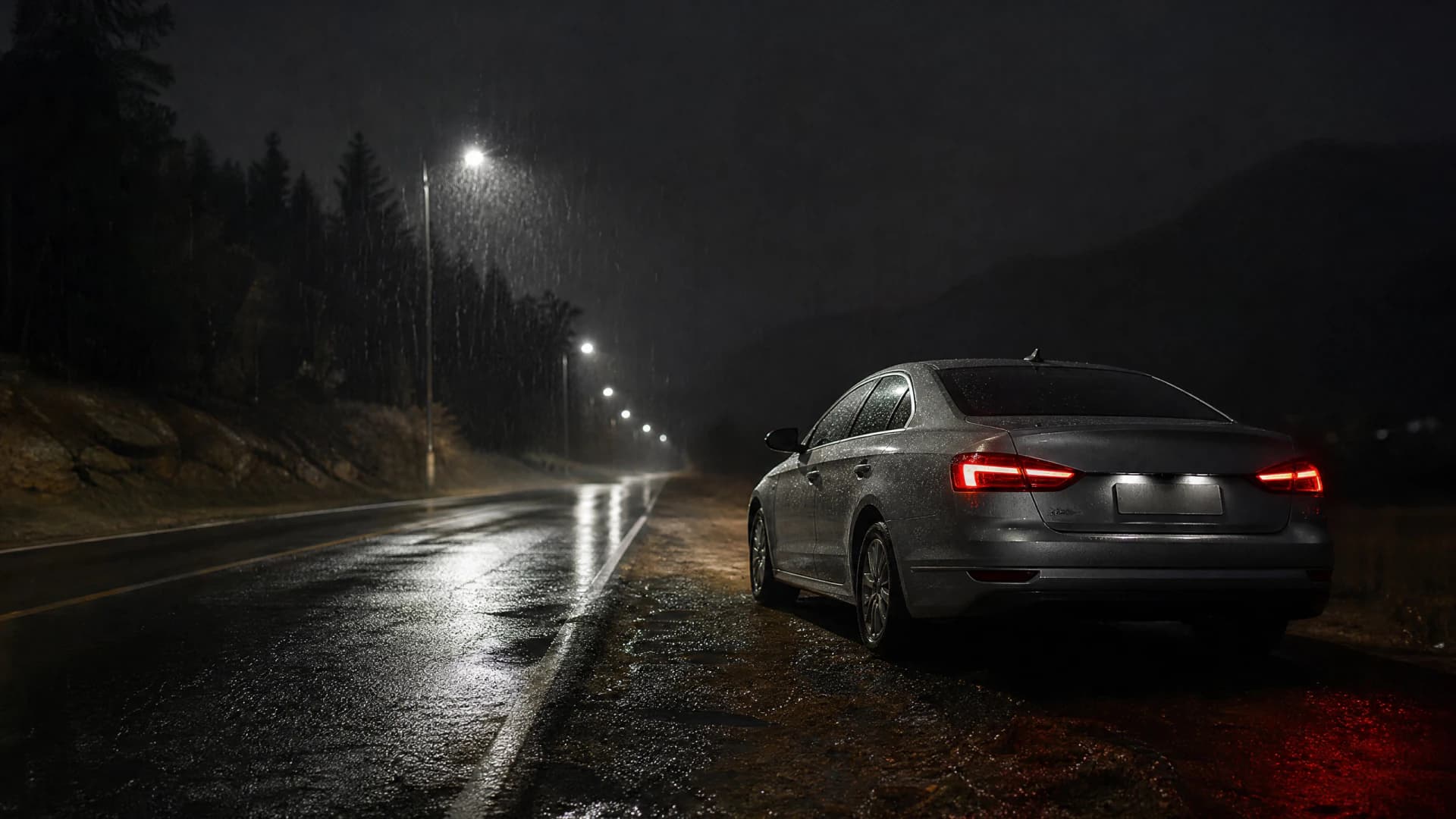
The SR-22 filing requirement applies to your entire auto insurance policy, raising premiums on every vehicle your household insures for the full three-year period.
Related Articles


How the SR-22 Requirement Works
The SR-22 is not insurance. It is a certificate your insurance carrier files with the state proving you carry at least minimum liability coverage. If you cancel coverage, miss a payment, or let the policy lapse for any reason, the carrier notifies the Driver License Division within 24 hours. The state suspends your license immediately.
For households insuring multiple vehicles, the SR-22 filing applies to the entire policy. You cannot isolate the SR-22 requirement to one vehicle or one driver. Every vehicle on the policy carries the SR-22 flag, and the carrier treats the entire household as high-risk. This raises premiums across all vehicles for the full three-year filing period.
Utah allows two SR-22 form variants: owner and non-owner. The owner form covers a specific vehicle you own. The non-owner form covers you as a driver when you operate vehicles you do not own. If you manage a multi-car household, you need the owner form. If you sold your vehicle and no longer own a car but still need to satisfy the SR-22 requirement, the non-owner form keeps your license valid.
$40
Utah License Reinstatement Fee
Utah charges a $40 reinstatement fee after a driving-without-insurance suspension. The fee is paid directly to the Driver License Division and is separate from any court fines, SR-22 filing fees, or insurance costs. You cannot reinstate your license until the fee is paid in full.
Utah Driver License Division

Hardship License Option
Utah offers a Hardship Limited License for drivers who need to drive for work, school, or child visitation during a suspension. You must contact a Driver License Division hearing officer for an eligibility review. The state requires employer verification of work hours, a letter of recommendation from the last convicting judge, proof of undue hardship, and clearance of indefinite department actions. For alcohol or drug-related suspensions, you need physician verification of no controlled-substance use for three years and a one-year violation-free record.
The hardship license restricts your driving to specific routes: to and from work, school, or child visitation. You cannot use it for errands, social trips, or any purpose outside the approved routes. The state monitors compliance, and any violation of the route restrictions triggers immediate revocation of the hardship license and extends your full suspension.
Finding Coverage After a Violation
Not every carrier writes SR-22 policies. Standard carriers often decline to write new policies for drivers with recent uninsured-driving violations, and some cancel existing policies when the SR-22 requirement appears. You need a carrier that writes SR-22 in Utah and accepts high-risk drivers. Carriers writing SR-22 in Utah include Geico, Progressive, State Farm, Farmers, National General, Dairyland, Bristol West, The General, and GAINSCO. USAA writes SR-22 for eligible military members and their families.
Compare quotes from at least three carriers. SR-22 premiums vary widely, and the carrier offering the lowest rate for your household before the violation may not offer the best rate after. For multi-car households, ask each carrier how they apply the SR-22 surcharge: some carriers raise the base rate across all vehicles, others apply a flat fee per policy term. The structure matters when you insure three or more vehicles.
Reinstatement Requirements
First, obtain auto insurance from a carrier licensed to write SR-22 in Utah. The policy must meet Utah's minimum liability limits: $30,000 bodily injury per person, $65,000 bodily injury per accident, and $25,000 property damage. Utah also requires personal injury protection coverage on every policy. Your carrier files the SR-22 certificate electronically with the Driver License Division once the policy is active.
Second, pay the $40 reinstatement fee to the Driver License Division. The fee is separate from any fines or court costs associated with the original violation. Third, clear any other indefinite department actions on your record — outstanding tickets, unpaid fines, or compliance holds. Fourth, maintain continuous SR-22 filing for three years without any lapse. A single day of lapse resets the three-year clock and triggers a new suspension.
Get Your Free Quote
Get My Utah Car Insurance QuoteFrequently Asked Questions
How long does a Utah driving-without-insurance suspension last?
Utah does not publish a fixed suspension duration. The suspension runs until you obtain insurance, file SR-22 proof with the Driver License Division, pay the $40 reinstatement fee, and clear any other indefinite department actions. Once you satisfy all requirements, the state lifts the suspension, but the SR-22 filing requirement continues for three years.
Does the SR-22 requirement apply to all vehicles in my household?
Yes. The SR-22 filing applies to your entire auto insurance policy, not to a single vehicle. If you insure multiple vehicles on one policy, the carrier treats the entire policy as high-risk and raises premiums across all vehicles for the three-year filing period. You cannot isolate the SR-22 requirement to one car.
Can I get a hardship license in Utah after a driving-without-insurance violation?
Yes. Utah offers a Hardship Limited License that allows driving to and from work, school, or child visitation. You must contact a Driver License Division hearing officer for an eligibility review and provide employer verification, proof of undue hardship, and clearance of indefinite department actions. The license restricts you to approved routes only.
What happens if I let my insurance lapse during the SR-22 filing period?
Your carrier notifies the Driver License Division within 24 hours of any lapse. The state suspends your license immediately, and the three-year SR-22 filing period resets from the date you reinstate coverage. You must pay the $40 reinstatement fee again and restart the full three-year clock.
Which carriers write SR-22 policies in Utah?
Carriers writing SR-22 in Utah include Geico, Progressive, State Farm, Farmers, National General, Dairyland, Bristol West, The General, and GAINSCO. USAA writes SR-22 for eligible military members and their families. Not all carriers accept drivers with recent uninsured-driving violations, so compare quotes from at least three carriers.
How much does SR-22 filing cost in Utah?
Utah does not charge a separate state SR-22 filing fee. The filing fee is separate from the $40 license reinstatement fee and any premium increases the carrier applies to your policy.