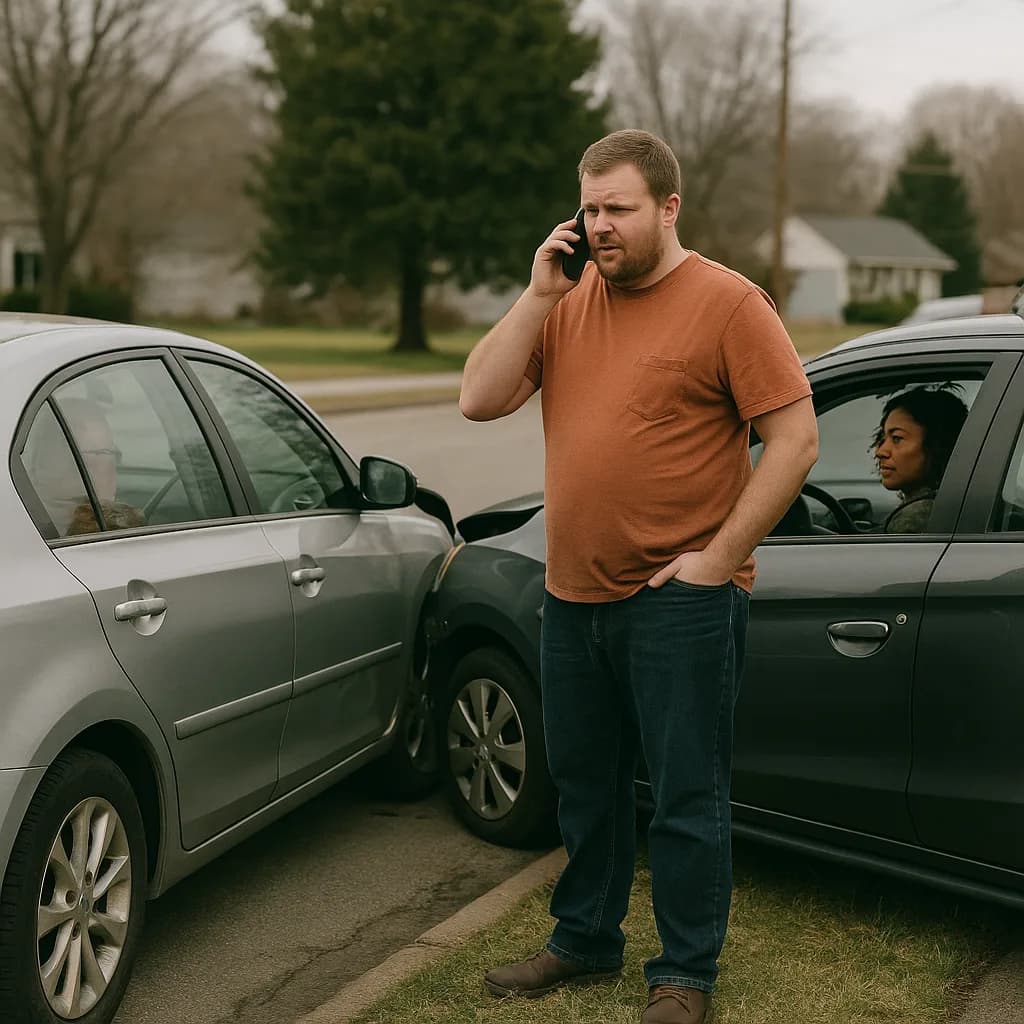
Utah Requires PIP But Is Not a No-Fault State
You're trying to understand whether Utah operates under a no-fault insurance system, likely because you're structuring coverage for two or more vehicles and need to know whether fault matters in a claim. The answer creates confusion: Utah is not a no-fault state, but state law requires every auto policy to include personal injury protection coverage. That combination makes Utah's system different from both pure fault states and pure no-fault states.
In a true no-fault state, your own insurance pays your medical bills after an accident regardless of who caused it, and you cannot sue the at-fault driver except in severe cases. Utah does not work that way. You can file a claim against the at-fault driver's liability insurance, and you can sue for damages without meeting a threshold. But because Utah mandates PIP coverage, your own policy pays your immediate medical expenses first, then you pursue the at-fault driver's insurer for remaining costs and other damages.
Compare car insurance rates in your state
Get quotes from licensed carriers — no obligation, no spam, results in minutes.
Get Your Free QuoteUtah Minimum PIP Coverage
This pays your medical expenses and lost wages after an accident, regardless of fault, before you file a claim against the other driver's liability insurance.
Utah state insurance statute
How Fault Works in Utah Claims
Utah follows a modified comparative fault rule. Your recovery is reduced by your percentage of fault.
This matters for a household with multiple vehicles because each car on your policy carries the same liability and PIP structure. If one vehicle is involved in an at-fault accident, the liability coverage on that policy responds. If another vehicle is hit by an at-fault driver, your PIP pays your immediate medical costs, then you file a third-party liability claim against the other driver's insurer for the remainder.
The confusion arises because PIP coverage functions like no-fault coverage in the immediate aftermath of an accident: your own insurer pays your medical bills without waiting to determine fault. But unlike a true no-fault state, Utah does not restrict your right to sue or require you to meet a serious-injury threshold before pursuing the at-fault driver. You have access to both your own PIP coverage and the at-fault driver's liability coverage.
Utah's PIP requirement means your policy pays your medical costs first, but you can still pursue the at-fault driver's liability insurer for remaining damages without meeting a threshold.
What PIP Covers on a Multi-Vehicle Policy

PIP pays medical expenses, hospital bills, rehabilitation costs, lost wages, and funeral expenses up to the policy limit. PIP covers you, your household members, and passengers in your vehicle at the time of the accident. It also covers you and your household members if you are injured as pedestrians or while riding in someone else's vehicle.
When you insure multiple vehicles on one policy, the PIP coverage applies to all listed vehicles and all household members. If one car is in an accident, the PIP limit is per person, not per vehicle. That means if three people in your household are injured in separate accidents involving different vehicles on the same policy, each person has access to the full PIP limit. The coverage does not split across vehicles.
Related Articles





Liability Coverage and the At-Fault Driver's Insurer
After your PIP coverage pays your immediate medical costs, you file a claim against the at-fault driver's liability insurance for the remainder. Utah requires minimum liability coverage of $30,000 per person for bodily injury, $65,000 per accident for bodily injury, and $25,000 per accident for property damage. If the at-fault driver carries only the minimum and your damages exceed those limits, you recover the difference from your own underinsured motorist coverage if you carry it, or you sue the at-fault driver personally.
For a household with multiple vehicles, this structure means you need both adequate liability coverage on your own policy in case you cause an accident, and adequate uninsured and underinsured motorist coverage in case the other driver's limits are too low. Utah does not require uninsured motorist coverage, but most carriers offer it and it protects you when the at-fault driver has no insurance or insufficient limits.
The interaction between PIP and liability coverage creates a two-step claims process. Your PIP pays first, up to its limit, for your own medical costs. Then you pursue the at-fault driver's liability insurer for medical costs exceeding the PIP limit, property damage, lost wages beyond what PIP covered, and pain and suffering. Because Utah is not a no-fault state, you are not restricted in what you can recover from the at-fault driver.
Utah Uninsured Motorist Rate
6.2%
Approximately 6.2 percent of Utah drivers are uninsured. When an uninsured driver causes an accident, your PIP pays your immediate medical costs, but you have no liability insurer to pursue for remaining damages unless you carry uninsured motorist coverage on your own policy.
Insurance Research Council, 2023
Structuring Coverage Across Multiple Vehicles
When you insure two or more vehicles on one policy in Utah, every vehicle carries the same liability limits, the same PIP coverage, and the same uninsured and underinsured motorist coverage if you add it. You cannot assign different liability limits to different vehicles on the same policy. If you need higher liability coverage for one vehicle because it is driven more frequently or by a higher-risk driver, you must raise the limits for the entire policy.
The advantage of a multi-vehicle policy is that PIP and uninsured motorist coverage apply to all household members across all listed vehicles. If one car is totaled by an uninsured driver and another car is rear-ended by an underinsured driver in separate incidents, both claims draw from the same uninsured and underinsured motorist coverage limits. The coverage is per person and per accident, not per vehicle, so the structure protects the household rather than individual cars.
Compare Carriers and Structure Your Policy
Utah's hybrid system means you need both PIP coverage to pay your immediate costs and adequate liability and uninsured motorist coverage to protect against at-fault drivers with low or no insurance. When you compare carriers, confirm that every vehicle on your policy meets the state's minimum PIP requirement, that your liability limits are high enough to cover a serious at-fault accident, and that you have added uninsured and underinsured motorist coverage to fill gaps left by drivers who carry insufficient insurance. The right structure depends on how many vehicles you insure, how many household members drive them, and whether your household's total liability exposure justifies limits above the state minimum.